Haïti Thoughts #1 – Firemen don’t just fight Fires


This image copyright BBC News

The sheer scale of the loss of life and devastation in Haïti is far beyond the comprehension of most horrified First World viewers. We sit comfortably among soft furnishings on sofas, in warm, solid and impermeable houses, watching the crisis unfold on our over-sized television screens. Haïti has certainly kicked early January’s grumblings about the UK snow into rather sharper perspective.

The bereavement and misery beaming across the Atlantic is so shocking that, unsurprisingly, news organisations on the ground are constantly on the look out for stories with some sort of happy ending – no matter how qualified that happiness might be.

I cannot believe I was the only viewer weeping, when a team of UK firefighters located and rescued two-year old Mia, who had been trapped under the ruins of her nursery in Port-au-Prince for more than 72 hours. Mia was reportedly initially located by Echo, an Urban Search and Rescue dog with the team of volunteers from Greater Manchester Fire and Rescue who flew out to Haïti last week.

More than 60 firefighters, from services in Manchester, Lancashire, West Sussex, Kent, the West Midlands, Lincolnshire, Hampshire and mid and west Wales, have been helping out in Haïti. Many of them were deployed by Rapid UK, a UK-based NGO, specialising in the relief of human suffering and distress in the aftermath of disasters, anywhere in the world.

Watching the British firefighters working tirelessly in Haïti reminded me of just how versatile these men have to be. Firemen do not just fight fires; far from it. These men and women are the members of the original emergency service, dedicated to protecting life, property and the environment – whether they are assisting at a fire, a car crash, or as in this case, a natural disaster. They are also invariably the first on the scene at unnatural disasters: 343 members of the New York Fire Department perished in the ruins of the Twin Towers on 9/11.

When my father, Fred Jackson, joined the Fire Brigade in Doncaster in 1947, his initial weekly salary was £4-10/- (four pounds & ten shillings - £4.50, in today’s money; about US$7.25). Fortunately, salaries have moved on somewhat since then, as have the technology, the engineering and associated fire appliances. This progress has helped to reduce disaster mortality rates, if only in developed countries.

Growing up in Hong Kong, my brother, Rory, and I were acutely aware that my father had a very important job, something that had to do with saving lives. He always had to remain in 24-hour radio or telephone contact with HQ; his weekends were often truncated and our free time with him was always overshadowed by the baleful presence of “Control”.

On a brief family break on the offshore island of Lantau in the early 1970s, Dad was spirited away one morning before breakfast. He did not return until early evening, covered in blood, soot and oil. He was also very quiet – a familiar sign that he had been at a fire or incident with fatalities. Next day, Mum told us that a minibus had crashed into a ravine. Dad had supervised the rescue operation and had personally freed half a dozen of the 23 survivors; 17 other passengers died.

Dad was also in charge in June 1972, when a steep hillside on Hong Kong Island collapsed, following days of unprecedented heavy rains, sweeping away a 13-storey apartment block on Kotewall Road. The incident itself was vividly, and terrifyingly, fictionalised by Rhodesian-born writer John Gordon-Davis in his 1978 novel Typhoon. In real life, 67 people perished. The half a dozen survivors whom my father was responsible for digging out remained in contact with him until his death in 2008.

That firefighters who already have such dangerous day jobs should volunteer to help out at disasters such as the crisis currently playing out in Haïti is extraordinarily humbling. We have all heard about Médecins sans Frontières; yet who knew that MSF had a sister organisation? Firemen without Borders.


This image copyright Greater Manchester Fire & Rescue Service

Rapid UK may be best known for search and rescue in the aftermath of sudden onset disasters, yet two-thirds of their efforts go into overseas training. They return to countries where they have previously deployed in an emergency, to provide training to expand capacity and thus mitigate the effects of future disasters. They also help to facilitate the donation of redundant UK emergency vehicles, such as ambulances and fire engines, to countries in need.

Rapid UK is entirely funded by donations and does not receive any funds from the UK Government, from the Disasters Emergency Committee or any other generic fund raising organisations or charities. Click here to find out more about their work.

Echo, and his furry friend back in Manchester, fire investigations dog Cracker, also have their own blog here - although it has been said that Crew Commander Mike Dewar helps them out from time to time.

“They told us it was none of our business…” – How Data Protection may have done for Derrick & Jean Randall


Dad, determined to be "useful" - on one of his last visits to Bedlam

The unimaginably sad end of elderly couple, Derrick and Jean Randall, found dead in their Northamptonshire bungalow last week, has triggered a predictable round of: “What is society coming to?” headlines, with an equally noisy backdrop of slamming stable doors and suitably sorrowful sound bites from the relevant authorities.

There is never anything pleasant or easy about the end of anybody’s life, no matter how old, how frail or how ill. Yet even my dear old Dad spent his last three weeks, in a comfortable room, in a slightly scruffy but clean and bright care home, being ministered to by a team of kindly nurses and palliative carers whose professionalism and dedication to their delicate tasks we never doubted for a second. The briefest trip to the dismal parallel universe of geriatric care would convince the hardest cynic that “society” is still alive and very much kicking – and caring.

There are clearly several complex issues surrounding the Randalls’ case but I agree with their MP, Sally Keeble, who raised the tragedy in the Commons earlier this week: “People say: 'Oh, they were reclusive', but I don't really accept that argument”.

What chilled me most about the reports of the Randalls’ death were the interviews with many of the couple’s neighbours, who insisted they had tried to contact both local social services and relevant charities:

“When I said, no, I wasn’t related to the Randalls, they said that it was none of our business. There was nothing they – or we – could do...”


The reason one concerned neighbour, Heather Footitt, and others were unable to get the relevant authorities to take their concerns about the Randalls seriously, or to act on them, is down to the now extremely stringent rules and regulations surrounding data protection in this country.

In this era of cyber-bullying, financial hackery and identity theft, it certainly makes sense to have some sort of data protection in force. Yet the act itself has now become highly complex and social workers and other local authority employees are now in terror of breaching its increasingly convoluted proscriptions. Consequently, there is now no scope whatsoever for the latter individuals to apply a reasonable dose of logic and common sense to individual cases. Surely Mrs Footitt did not have to be next-of-kin to have her very real concerns about the Randalls’ welfare taken seriously? It appears that she did.

I speak from experience. As many of you know, I am unable to go into detail about events during my father’s final months, many of which remain sub judice. So I won’t, for now, be identifying the local authority whose Family Services Department refused, on scores of occasions, to tell me anything at all about the welfare, well-being and often the physical location of my own father, even as his dementia progressed.

Late one Sunday night at the end of July 2008, my mobile went. I saw it was my father, calling from the cell phone we had given him, and answered immediately.

“They are sending me away again, Doh. I don’t know where to. I don’t know when. Tonight or tomorrow. I don’t know when I am coming home. Or if I am coming home. Will you come and get me? Please?”

By this stage, Dad was in the latter stages of Dementia with Lewy Bodies which often made him confused, with vivid, debilitating hallucinations. The DLB had also begun to affect many of his autonomic systems, leading to bouts of bowel and bladder incontinence, which particularly assaulted his natural dignity.

Next morning I called the Social Work team with whom I had been in regular contact regarding our very serious concerns about Dad. I explained about the upsetting phone call, my father’s audible distress and fear and asked if they might let me know to which of their care homes my father had been sent?

“Sorry, Ms Jackson, but we can’t tell you where your father is - as you are not next-of-kin”.

As data protection stands, despite being Dad’s sole, surviving, child, I simply had no rights whatsoever - to be informed about his location, health or indeed survival. Dad’s official next of kin, his spouse, my step-mother, who had left unexpectedly for an unspecified location and an unspecified period of respite – something we never begrudged her – had popped him into an ambulance, with a few pairs of pyjamas and a list of his medication. But the social worker was not going to tell me where my Dad was, or far more importantly, whether he was alright. She was not even prepared to leave a message with the care home, asking Dad to get in touch with us.


“If I told you where Fred was, Ms Jackson, I could well lose my job…”


My mobile rang again; it was my Dad, in tears: “Can you come and get me? I’ve had a few problems with my waterworks and that? I don’t know anybody here and I don’t want to ask them for this kind of help…”

I did finally locate Dad, thanks to Google Earth and to some well-remembered directions from his brother-in-law. In what state I found him is another story which I will definitely be relating, once it is, of course, legally safe to do so…

I would never have wanted that social worker to jeopardise her job; yet how I wish someone in her department might have lifted their eyes from the box-ticking, the protocols and the pathways to see that I was not a serial killer, trying to find out where my next victim was hiding. I was just a loyal daughter, responding to a pitiful and heart-rendingly desperate plea from my sole surviving, frail and ailing parent.

Likewise, if just one person at Northampton Social Services had been able - or indeed brave enough - to join the dots between all the anxious calls about the Randalls from Heather Footitt and other neighbours, perhaps Jean and Derrick would have received the support they clearly so desperately needed – before it was so tragically too late?

World Aids Day: Me, Carla, Complacency & my pal, Patrick


Well, I never. Me & Carla? Who would have thought it? I can see that you may not believe it - you have all seen my - more or less - non-airbrushed avatar, after all. However, it IS true. I do have something in common with Mme Bruni-Sarkozy, super chic, erstwhile super-model, surviving Stones-ex, presidential consort, tricksy lyrical Franco-Italian chanteuse. Until today, I had no idea that Carla, like me, had also lost her beloved brother to HIV/Aids.

“Because of my brother, of course I am very sensitive to the issue of Aids…”

It could be me talking but, in fact, it is the the supermodel-turned singer, speaking to Elle magazine. Carla’s photographer brother, Virginio, died of an AIDS-related illness in 2006. The title of her third album "Comme si de rien n'etait" (As If Nothing Happened) is named after one of Virginio's photographs. He was 46.

My own brother Rory died, aged 29 in 1995. My World Aids Day post last year - which explains a bit more about him - is here. In it, I tried my best to explain my fury and my frustration at the prejudice and ignorance which surrounded HIV/Aids in the early 1990s. Things have, thankfully, moved on somewhat since then and mortality patterns have changed dramatically. In developed countries, such as the US or the UK, where HAART (highly active anti-retroviral therapy) is now widely available, an HIV diagnosis is no longer the terminal sentence it was two decades ago.

Nevertheless, the number of people, globally, living with HIV has risen, from around 8 million in 1990 to 33 million today, and is still growing. Around 67% of people living with HIV are now in sub-Saharan Africa. We cannot afford, to quote NBF Carla, to be complacent.

We all suffer from degrees of complacency – in all aspects of our lives. Earlier this year, I realised that I had been horribly complacent about my relationship with Rory’s partner, Patrick, who unexpectedly died in March this year.


When Rory was ill, he made me promise more than once, that should he “not get better” than I would faithfully “keep an eye” on Pat, his partner in crime and probably much else for more than a decade. I assented several times, (mainly in order to move the conversation onto less morbid subjects). But blow me, my little “Bother” did die on me, leaving me with the then unenviable task of keeping to my word. Patrick was a quiet, only occasionally camp, casualty of a misjudged 1960s marriage, a highly intelligent and sensitive auto-didact, with a passion for art and architecture, and a zest for life and experience that the straitened circumstances of his childhood and adolescence had effectively denied him.

My brother was dead; his ashes interred in my mother’s grave. What could I possibly have in common with this shy bloke, whose relationship with my sibling I had never fully understood? There is no space here to go into the details of my own 20-odd year relationship with Patrick. That story would need a novel to do it justice.

However, we eventually became dear, dear friends and when he died, aged only 49, I was utterly and debilitatingly devastated. Pat did not die of HIV/Aids – (although, succumbing to pressure from friends such as myself, he had finally taken the test and, for the last few years, he had been receiving the latest anti-retroviral therapies from an extraordinary medical team at UCH in London). In the end, he succumbed to a primary cancer, horribly, but mercifully swiftly and more courageously and stoically than I can adequately explain. He thus joined the First World statistics of boys (yes, they are mainly) who are HIV positive but who do not, and will not, ultimately have Aids on their death certificates.

You no doubt will be acquainted with somebody who is HIV positive – whether you are consciously aware of that fact or not. New and ever better drugs mean that our siblings, cousins and friends have been able to continue living under the shadow of this once terminal diagnosis for the best part of two decades. It does not, however, mean that any of us should be in any way complacent about the fact that they are – for the moment – still here with us.

From Flanders Fields to Fallujah, Alemain to Afghanistan. Have Tweeting troops and Milbloggers brought us any nearer to Peace in our Time?


(This image - copyright Steven Danby)

It may be just me getting older, but the 11th Day of the 11th Month seems to come around again each year faster than the last. It is now more than 90 years since the Allies signed the Armistice with Germany, ending the Great War, in a railway carriage parked up in the forest of Compiègne in 1918.

The last swift 12 months also saw the sad passing of Britain’s last fighting Tommies, World War One veterans: Henry Allingham, Harry Patch and Bill Stone. Nobody who watched the 112-year old Allingham try, try again and finally fail, to lay his wreath at last year’s Cenotaph service can have any doubt as to the character of this man and of his generation.

My own father, Fred Jackson ISO, QFSM, CPM, a veteran of the D-Day Normandy Landings, also passed away last December, so this is the first year that I will watch today’s services of Remembrance alone, without Dad’s informed and emotional running commentary.

Many Great War survivors never spoke of the horrors they witnessed. Most extant documentary is limited to scrawled missives, somehow delivered home from the Trenches and, perhaps more affecting, some of the most powerful English poetry ever written, from such as Wilfred Owen and John MacRae.

Today, arguably, we know more about the theatre of war than we might honestly wish to know. Photographers and film crews embedded with US and British forces in Iraq and Afghanistan may operate under official restrictions, but they are still able to give us a far more comprehensive picture of life on the frontline than we have ever seen before.

At the same time, the explosion in on-line self publishing, the rise of the Milblog and a recent profusion of frontline forces using Social Media tools, such as Twitter, has given anyone who chooses to tune in, a far more candid, soldier’s eye, view of what it is really like, day-to-day, defending Queen and Country. The Americans are already worried about the impact of these new, almost impossible to police, channels although they have yet to be banned.

But has this new, if still slightly tentative, source of grass roots information, and the supposed transparency it heralds, done anything at all to alter public opinion about the legitimacy of what is being prosecuted in the world’s most visible war zones?

I have already posted about Stars-and-Stripes draped caskets on my photojournalism blog and about whether or not the powers that be have legitimate cause to fear the widespread dissemination of these eloquent images. Here in Britain, we have seen a plethora of similar images over the last 48 hours, with the sobering total of six corpses repatriated only yesterday – five men, the victim of a single Afghan police assassin; one of them, Jimmy Major, 48 hours short of his 18th birthday.

Over the same news cycle, Prime Minister Gordon Brown has come under fire for his perceived callous treatment of grieving mother Jacqui Janes. If the blanket coverage of Mrs Janes’ grievances and of the silent tributes as cortège after cortège trundles through the town of Wootton Bassett is anything to go by, the Mainstream Media are now closely tracking a groundswell of public animus against the War in Afghanistan.


A total of 232 British forces personnel have died in Afghanistan since 2001. I used to keep a tally of the fallen on my Babel@Bedlam blog but scrapped the widget months ago. It was simply too depressing. A recent poll for the Independent newspaper showed that 46 per cent of voters believe the continued presence of British troops is compounding security anxieties back home.

I haven’t been down to Wootton Bassett myself. I don’t need to. The hearses carrying the coffins of the latest broken boys drive practically past my front door, along the A420 trunk road from RAF Lyneham, en route to the John Radcliffe Hospital in Oxford. In July, I practically crashed the car returning home, as the chilling sight of not one, not two, but five Union Flag draped coffins filed slowly past on the other carriageway.

Only last month, I was held up by a stern police motorcycle outrider, as I attempted to join the main road, on my way home from walking the dogs along the Thames tow path at Radcot. This time, only one hearse went past, with an escort more usually seen in London, accompanying some visiting dignitary’s motorcade.

Yet one coffin was more than enough for me. I burst into hot, angry tears and wept so noisily, and for so long, that Harley, our young springer spaniel bitch, squeezed through the mesh of the dog guard and jumped onto my lap, to find out what on earth could possibly be so wrong.

Requiescat in Pacem.

Elder Abuse: How much longer can "the hidden problem" stay hidden - as Dementia Rates continue to rise?


DR. ALOIS ALZHEIMER (1864-1915)


More gloomy statistics have just emerged about the inexorable rise of dementia across the globe. Experts from King’s College London predict that more than 115 million people will succumb to senile dementia by 2050. Dementia victims are patently more vulnerable to elder abuse than their lucid contemporaries – as I saw with my own father who was exploited exponentially, as his Lewy Body Dementia progressed.

This incontrovertible fact is being played out in the headlines which continue to emerge from New York where 85-year old Anthony Marshall is on trial for Grand Larceny for allegedly attempting to defraud his wealthy socialite mother, Brooke Astor, of millions of dollars, as she languished in poor physical and mental health over the last few years of her life. This week, prosecutors told the court that Mrs Astor’s Alzheimer’s had progressed so far by the early years of this century that she no longer knew where she lived and was convinced by her son that she did not have sufficient funds to buy herself a new dress.

The King’s research is part of the 2009 World Alzheimer’s Report and sees the number of dementia sufferers set to double every 20 years, to more than 65 million by 2030. The report highlights the economic impact of our ever-ageing world, as advances in healthcare and nutrition see the grey population continuing to grow.

Report contributor, Professor Martin Prince made a heartfelt plea for increased awareness: “Current investment in research, treatment and care is quite disproportionate to the overall impact of the disease on people with dementa, the carers, on health and social care systems, and on society".

Only a few weeks ago, leading geriatricians in the United Kingdom warned that the ageing population, coupled with this rise in dementia could break Britain's National Health Service. In a plea for more research investment, 11 specialists predicted that the economic burden of dementia would reach £35 billion within 20 years.

Professor Roy Weller makes an eloquent plea for more research funding here:


Mrs Astor in her Park Avenue penthouse, days before her 100th birthday in 2002.

Back in NYC, the Brooke Astor trial, which has limped on and on, since April, finally heard closing arguments last week. I hope to use this forum to post on the verdict as soon as it is announced.

Elderly Abuse? "The next social Explosion"

The day after I set up this blog, Britain’s respected Telegraph newspaper carried an interview with a senior policewoman, Barbara Wilding. I was slightly surprised to see it as the “splash” or lead story on Page One. But then I read the headline: “Assisted suicide could be excuse to kill burdensome elderly, says police chief.”

Incendiary stuff indeed, but not undeserving of consideration, particularly when voiced by such an experienced police officer with more than 40 years’ experience on the front line and a long-documented interest in fundamental socio-economic issues.

Personally, I am not (yet) sure how I feel about assisted suicide. The Netherlands’ initial move towards legalising euthanasia was practically my very first “scoop”. At the time, I was a rookie journalist, posted to Amsterdam and charged with reading the normally deathly dull Government chronicle to improve my Dutch.

“Euthanasie” I could just about grasp and, with my trusty dictionary to hand, I worked out that the dry announcement regarding the following day’s parliamentary debate contained a potentially explosive story. I hope to return to this problematic issue again in this forum. Yet I was more interested in other points raised in Ms Wilding’s interview.

Elderly abuse is something that we have yet to really grasp,” she said. It is one of the things that I think will be the next social explosion.”

She drew comparisons with the first discovery of widespread child abuse in Britain in the 1970s and said that abuse of the elderly was “the same sort of social issue; it can be covered up and the victims do not have a voice.”

Ms Wilding suggested that inter-generational tensions will be exacerbated by the ageing population. Figures released this week from the Office for National Statistics revealed that there are a record 1.3 million people over 85 in Britain, making up two per cent of the total.

Asked to define what she described as a potential explosion of elderly abuse, she said: It can range from the violent through to the psychological - not providing the medical care at the right time, looking after people to their needs and recognising that they are valuable members of society".


To read the rest of the interview please click here:

Signed: Elizabeth R


My Dad - 12/06/23-18/12/08 - Requiescat

The rumours are, I am afraid, all true. I was once an avid collector of autographs. Long, long before these our days of celebrity culture, I was an over-keen, gangly pre-teen, hanging around the stage door, never without my leather-backed notebook and lucky ball-point pen. I can still see the first three pages with their hurried yet clearly legible marks: Cliff Richard; Frankie Vaughan; Gilbert O’Sullivan!!!

The notebook is long gone, of course. Into some trunk, into some attic, gnawed on by rodents or consumed on some bonfire. I still have a few prized signatures, however; many of them just visible in the corners of the paintings & lithographs I started to collect when autographs per se started to pall. I’ve even got the Queen. Her bold Elizabeth R, in a rather beautiful frame, hangs on the wall above the sink (signed Philippe Starck) in our downstairs WC.

I didn’t actually wangle an invite to Buckingham Palace and whip out a scrap of paper and a fountain pen at a likely juncture. I didn’t need to. Her Majesty made her mark upon the royal warrant conferring the Imperial Service Order upon my father – making him Fred Jackson, ISO, QFSM, CPM. Every time I wash my hands, I now have a mental picture of the Queen, perched at a huge desk in Sandringham or Balmoral, spectacles on, looking as serious as Helen Mirren in that movie, working her way through a ream of parchment warrants, scratching out Elizabeth R again & again & again.

The ISO was established in 1902 by Edward VII. It is a limited order, awarded to a select group of civil servants “for long and meritorious service of the British Empire”. It was seriously limited in 1993, when it was quietly dropped in favour of the Imperial Service Medal; stands to reason – we haven’t really got an Empire any more.

Dad himself was quietly but hugely proud, not just of his ISO, but of his many awards. Myself, I was proudest when I went, in my Sunday best, to Government House to see Sir David Trench present Dad with The Governor of Hong Kong Lanyard – awarded for outstanding gallantry during the 1967 Communist uprising and riots. Self-effacing, modest & often surprisingly shy, the most he would ever say was: “not that bad for a boy from Askern, is it?”


A few years ago, Dad started to write his own memoirs. Alas, they stop abruptly in 1968 – when my mother, Tina, was first diagnosed with breast cancer. He has a charming, candid and quietly comic voice and I hope to do something with them at some stage. For now, I am afraid, the following will have to temporarily suffice:


Fred was born in 1923 in a tiny hamlet on the edge of the South Yorkshire coalfield. My grandfather, Cecil, was still a dairyman then but the pit at Askern would soon dominate the local economy. My grandmother, Violet, née Spink, went on to have another 10 children: Sidney; Charles, William Arthur; Anne Cecilia; Eric; Cecil; Stuart; Violet; Michael and Norma – the latter and her brother Eric both died as infants of pneumonia. At time of writing, both of Dad’s sisters and his brothers Bill and Michael survive him.

My grandfather went on to tend to the pit ponies and Dad’s bi-annual trip underground to bring them out for their brief respite in the fresh air convinced him that a miner’s life was not for him. Despite fierce paternal opposition, he escaped the pit by joining the Navy and swiftly, despite a truncated formal education, became a commissioned officer.


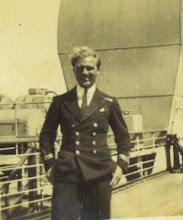
In 1944, he found himself accompanying the Canadian tanks across to Juno Beach on D-Day & celebrated his 21st birthday, not as I did, with champagne and canapés under an elegant 18th century colonnade, but on a battered landing craft, negotiating the choppy Channel waters on his way back to England. My mother clearly fell for this wind-burnished chap in uniform and they were married in October 1946.


Dad then joined the Fire Brigade in Doncaster and in 1956, he and my mother left for an initial three year contract in Hong Kong, a move rather braver than any gap year student with a mobile phone and laptop might now be able to fully comprehend.


My parents both loved the colonial lifestyle and tropical weather and my father endeared himself to his men by learning to speak fluent Cantonese (albeit retaining his distinctive Yorkshire accent). Dad was an exemplary officer and was decorated several times for gallantry. He was instrumental in preparing HKFS for the eventual localisation of senior ranks ahead of the 1997 handover and, by the time he retired in 1985, he was the Deputy Director of the Brigade.

Alas, in 1975, we lost my mother, Tina, to breast cancer and were doubly devastated less than 20 years later when my brother Rory became an early and ludicrously young victim of HIV/Aids. Dad himself enjoyed nearly 20 years of healthy retirement back home in Yorkshire until 2006, when on-going heart and vascular problems prompted his cardiologist to give him a pacemaker. This operation coincided with a diagnosis of a fairly rare condition: Dementia with Lewy Bodies, which, although not yet fully understood, seems to combine the worst elements of both Parkinsons and Alzheimers.

Difficult as it is to watch someone you love & who was once so very vital, thus cruelly diminished, I found it comforting that Dad’s vivid hallucinations – a key symptom of DLB – usually took him back to Hong Kong or to his Navy days and that very often he clearly saw my late brother, Rory, sitting amiably at the foot of his bed.

Otherwise, Dad’s final months were not as dignified as I, or indeed anyone who loved him (and we are many), would have wished. During this sadly protracted ordeal, myself and myriad close friends and family were forced to watch from the sidelines, more or less impotent and increasingly frustrated. We were effectively prevented from helping him by a combination of his particular personal circumstances, by a still unexplained reluctance to intervene by the appropriate authorities, compounded by some frankly risible, if superficially well-meaning, legislation.

Since his death, I have learned a lot. Not just about DLB and other forms of dementia, but about the swiftly rising tide of vulnerable adult and elderly abuse in this country, in the United States and throughout many other seemingly sophisticated European countries.

Child abuse is a heinous crime and deserves every headline, no matter how lurid, it receives. And yet; there is no financial incentive to abuse a child. A frail, not always 100 per cent lucid, elderly or disabled person is just as defenceless as a small child. The fact that the older victim may be in receipt of an attractive pension or live in a mortgage-free home makes them even more vulnerable - particularly in the current economic climate.

My hope for this blog is relatively modest: to raise awareness of the growing problem of vulnerable adult abuse and who knows, maybe even start to tackle the problem in a more concrete way? We shall see. Thank you for reading.